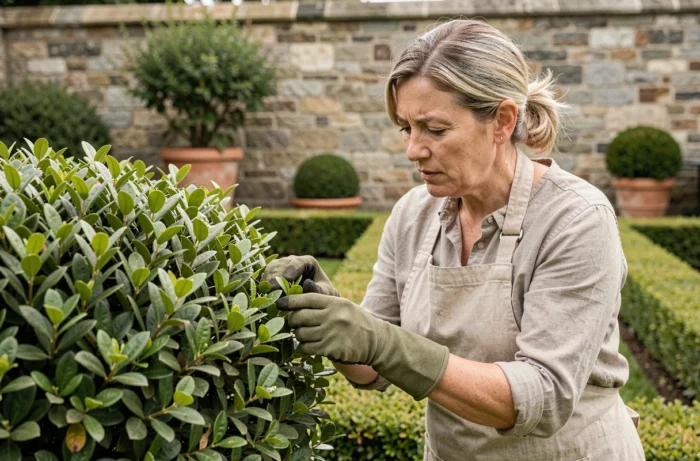
The box tree moth (Cydalima perspectalis) now occupies all metropolitan departments. This moth native to Asia reproduces up to three times a year, and its caterpillars can defoliate an entire shrub in just a few days. Since January 1, 2019, amateur gardeners are no longer allowed to use synthetic chemical pesticides, which limits options to biocontrol products, low-risk products, or those permitted in organic farming.
Box tree moth or box blight: the diagnosis most gardeners overlook
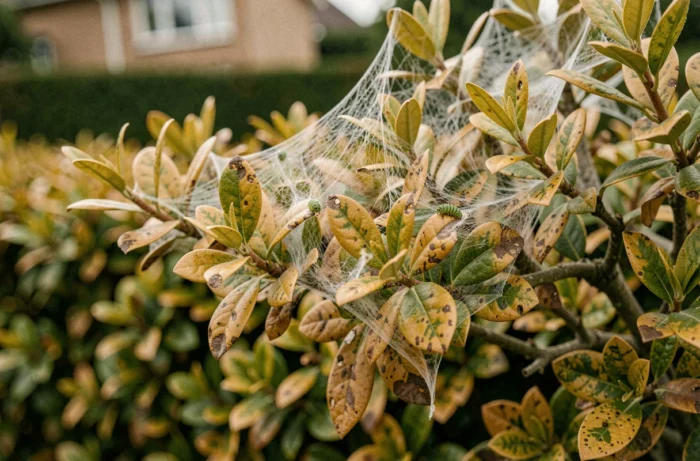
A box that is yellowing or blackening is not necessarily attacked by the moth. Several pathogenic fungi cause visually similar symptoms: discolored foliage, leaf drop, and dried branches. Treating a fungal issue with a biological insecticide is a waste of time and money.
The first reflex is to turn over a few leaves. The caterpillars of the moth leave characteristic traces: whitish silk threads, dark green droppings, and leaves eaten from the inside. In the absence of these clues, the problem is likely fungal in origin and requires moisture management, sanitary pruning, and possibly an approved fungicide.
Confusing the two pests leads to inappropriate treatments. A reliable visual diagnosis precedes any treatment, and this action takes less than a minute per shrub. When the box tree moth is correctly identified, it becomes possible to fight against the box tree moth with the right products at the right time.
Pheromone traps for the moth: a monitoring tool, not a treatment
Pheromone traps attract male butterflies using capsules that mimic the chemical signals of females. Their role is limited to detecting flights, not eliminating populations.
Pheromone traps are used to detect flight peaks, not to eliminate an infestation. Capturing a few dozen butterflies does not significantly reduce egg-laying, as a single female lays several hundred eggs. However, these traps allow for the detection of the beginning of each generation and scheduling inspections of the box at the most relevant time.
The real interest of the trap lies therefore upstream of treatment:
- Install the trap at the beginning of spring to catch the first flight of adult butterflies.
- Monitor captures weekly and inspect the foliage as soon as their number increases significantly.
- Trigger a biological treatment in the days following the appearance of young caterpillars, when they measure less than a few centimeters and remain vulnerable.
A pheromone trap without follow-up or complementary treatment does not protect the box. It is a sensor, not a remedy.
Bacillus thuringiensis against the moth: conditions for effectiveness and limits
Bacillus thuringiensis (Bt) remains the reference treatment for individuals. This bacterium produces a toxin that destroys the digestive system of caterpillars after ingestion. The product is permitted in organic farming and carries the label “Authorized for use in the garden.”
Treatment window and application
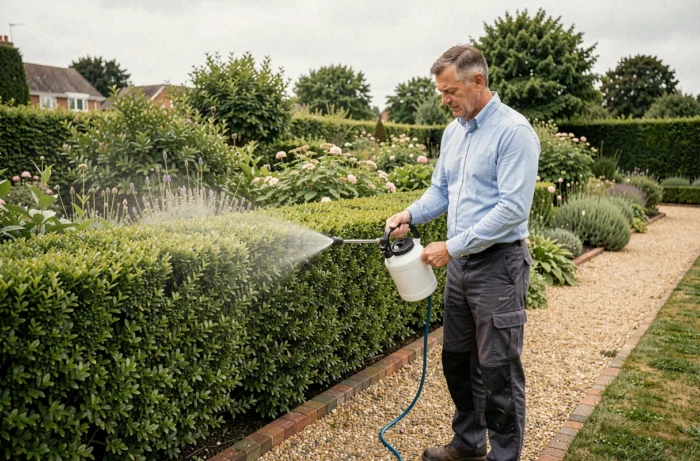
Bt only acts on young caterpillars in the active feeding phase. Spraying on already large caterpillars or on chrysalises yields almost nothing. Treatment is preferably done in the evening, as the bacterium degrades quickly under UV rays.
The spray must reach the interior of the foliage. Box trees trimmed into balls or topiary form a compact mass: the caterpillars feed at the heart of the branches, where the product penetrates the least. Manually separating the branches during application improves coverage.
What Bt does not do
Bt targets lepidopterans, not just the moth. Other caterpillars of butterflies present on neighboring plants may be affected. This factor should be considered if the garden is home to species that one wishes to preserve.
Moreover, Bt has no lasting preventive action. It degrades within a few days, and each new wave of caterpillars requires a new application. With two to three generations per year, the treatment schedule extends from spring to autumn.
Manual management and seasonal monitoring of infested box trees
Manually removing caterpillars, cocoons, and webs remains a useful supplement, especially for small hedges or isolated box trees. A powerful jet of water directed at the heart of the shrub can dislodge some of the caterpillars, which can then be collected from the ground.
Maintenance pruning after a severe attack helps the box tree to recover, provided that green waste is not burned in the open air (a practice prohibited for individuals). Infested residues must be bagged and disposed of with green waste or at a waste disposal site.
Seasonal monitoring relies on a simple schedule:
- At the beginning of spring, inspect the heart of the box trees for small overwintering caterpillars and residual webs.
- In summer, monitor the second generation, often the most destructive, and treat with Bt as soon as young larvae appear.
- In autumn, a third generation may hatch if temperatures remain mild, which justifies a final inspection pass.
The regularity of monitoring matters more than the potency of the product used. A box tree inspected every two weeks between April and October has a much better chance of survival than a shrub treated only once in a panic after complete defoliation. Spotting caterpillars before they exceed one centimeter conditions the effectiveness of all available treatments.