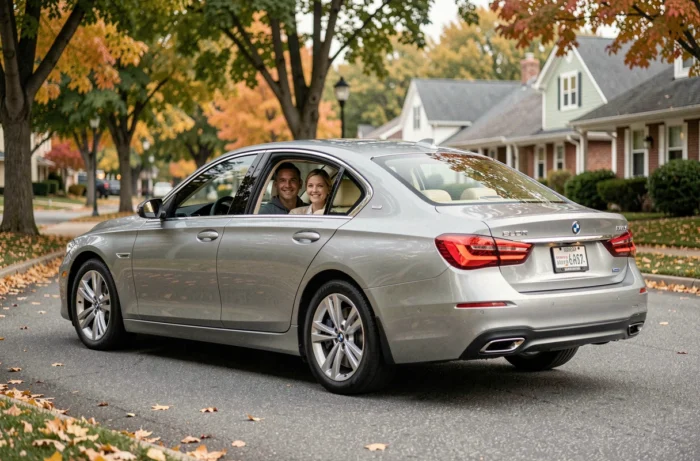
Three children seated in the back, three car seats side by side, and doors that still open without hitting the neighboring seat: this is the real specification for a family moving from two to three children. The problem is not just about counting the seats on the registration document.
Most vehicles advertised as “5 seats” offer a central seat that is either too narrow or lacks proper anchoring, making the installation of the third car seat either dangerous or simply impossible.
We will focus here on the points that technical sheets do not show: the actual compatibility between seats, the pitfalls of the central seat, and the models that live up to their promises once the three children are strapped in.
Bench Width and Isofix Anchors: What Really Matters
Displaying three seats in the back does not mean that three car seats will fit side by side. The majority of recent vehicles only offer Isofix anchors on the two side seats. The central seat ends up with just a simple three-point belt, and sometimes even a two-point lap belt on some older models.
A two-point belt is only acceptable if the car seat manual explicitly allows it. Many boosters and semi-universal seats exclude it. The result: a bench that seems wide on paper becomes unusable in practice for the third child.
Before buying or renting, it is recommended to check each car with 3 real seats in the back by physically installing the three chosen seats. The determining criteria go beyond the manufacturer’s sheet:
- The cumulative width of the car seat bases, which must not exceed the usable width of the bench (armrests included)
- The accessibility of the seat belt buckles once the three seats are installed, as a buckle stuck under a base makes installation dangerous
- The presence of Top Tether anchor points for each position, including the central seat
- The ability to open the doors and place each child without having to remove the neighboring seat
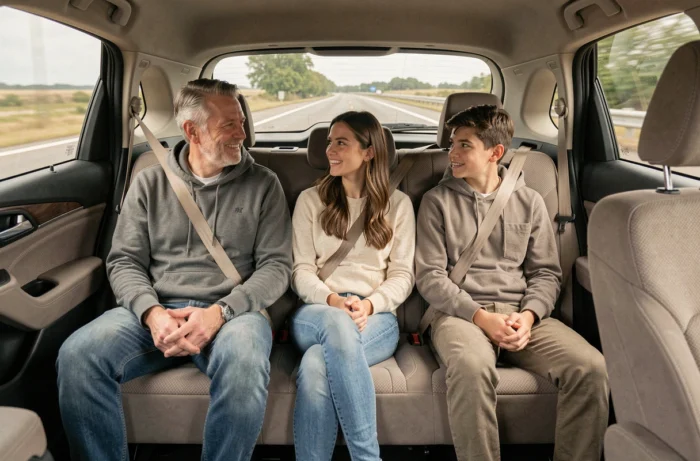
i-Size Standard and Seat-Vehicle Compatibility: A False Sense of Simplicity
The R129 (i-Size) standard has simplified the reading of labels by classifying seats by child size rather than weight. One might think that any i-Size seat fits into any i-Size vehicle. This is not the case.
Compatibility must be checked on a case-by-case basis, by cross-referencing the vehicle manual and the car seat manual. An i-Size approved seat may very well not fit the central seat of a given model, due to lack of anchoring or sufficient lateral space.
Family feedback on this point varies greatly depending on brand combinations. A set of three identical seats does not pose the same problems as a mix of infant seat, group 1 seat, and booster. The only reliable method remains a physical trial before purchase.
The Trap of False Family Vehicles
Some very popular compact SUVs advertise five seats, but their back bench measures barely more than a sedan. The central seat is raised, narrower, sometimes without a dedicated headrest. A compact SUV advertised as family-friendly may fail the three car seat test.
This problem is found in well-sold models. The vehicle category (SUV, station wagon, sedan) is not a reliable indicator. Only the actual width of the bench and the configuration of the anchors matter.
MPVs and Minivans: Categories That Live Up to Their Promises
MPVs like the Citroën Berlingo XL or the Peugeot Rifter offer a structural advantage: their utility platform provides a bench width greater than that of sedans or SUVs of the same price. Sliding doors also facilitate access to the back seats, which makes a difference when installing a child in a central seat.
MPVs remain the best space-to-price ratio for three car seats side by side. The Dacia Jogger, with its aggressive pricing, also offers a wide back bench, but feedback varies on the comfort of the central seat during long trips.
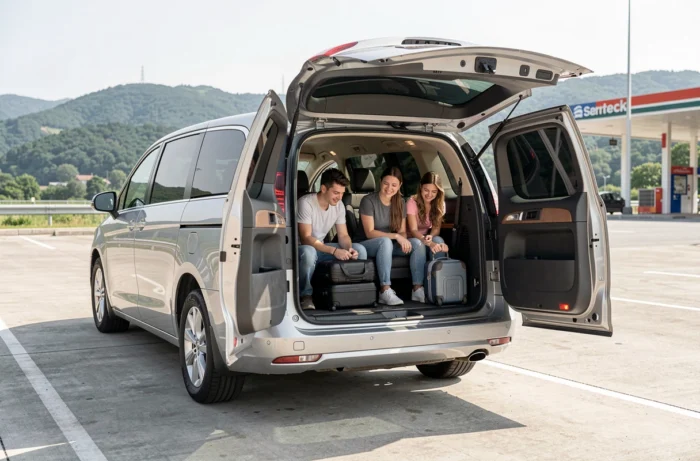
On the minivan side, the Volkswagen Touran remains a frequently cited reference. Its second row accommodates three individual seats with Isofix on the side positions and a usable central anchor point. The new generation Peugeot 5008 and the recent Renault Espace follow the same logic, with benches designed from the outset for three adult occupants or three child seats.
Used Vehicles: Beware of Regulatory Changes
Buying a used minivan may seem smart for the budget. One point deserves attention: a vehicle that was suitable with three narrow infant seats may become unsuitable as the children grow and move to larger seats. It is difficult to anticipate the transition from group 0+ to group 1, and then to a booster, which expands the footprint on the bench.
Regulations require a car seat suitable for the child’s morphology, not just their age. A roadside inspection may penalize an unsuitable device. Ensuring that the used vehicle remains compatible with the seats planned for the coming years avoids a hasty resale.
Field Checklist Before Buying a Vehicle for Three Children
We summarize the concrete checks to be made at the dealership or during a test drive:
- Install the three actual car seats (not display models) and check that no base overlaps the neighboring seat
- Buckle the three seat belts with the seats in place, ensuring that each buckle remains accessible without forcing
- Open and close each door (including sliding ones) with the seats installed to check access
- Check the presence and position of Top Tether anchors for the central seat
- Test the trunk with the three seats in place, as some models lose a significant portion of loading volume
A vehicle that passes these five points without compromise protects the family in the long term. The physical trial with your own seats remains the only reliable guarantee, far beyond any technical sheet or manufacturer video. Families that buy from a catalog often find themselves reselling within the year.