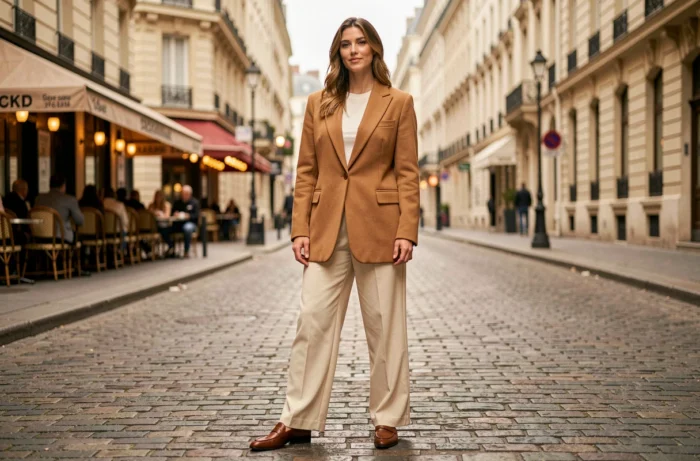
The autumn-winter 2026 shows confirmed a structural shift: fashion trends are no longer defined solely by the proposals of fashion houses, but by how garments are produced, distributed, and reused. This season, we observe strong signals that deserve a technical reading, beyond simple color palettes.
Structural upcycling and textile traceability: the new autumn-winter 2026 fashion standard
The Parisian laboratory Collectivo presented its Refonte AW 2026 collection by positioning upcycling as a central creative axis, not as an ancillary capsule. Reworked denim, leather, and knitwear are transformed with a conceptual approach to clothing.
Each piece comes with a traceability label indicating an average reduction of 92% in carbon footprint compared to an equivalent new production. This level of technical transparency distinguishes this approach from the usual marketing discourse on sustainability.
For brands wanting to follow this movement, the question is no longer about offering an “eco-responsible” line alongside the main collection. We recommend integrating traceability from the design stage, with verifiable data. Those who follow fashion on Wow Magazine know that this topic is part of the rising concerns among informed consumers.
The European anti-greenwashing directive, applicable from September 27, 2026, will make vague environmental claims illegal. Terms like “eco-friendly” or “green” without quantified proof will be penalized. Every brand will need to provide verifiable data on its sustainable claims, which accelerates the professionalization of upcycling.
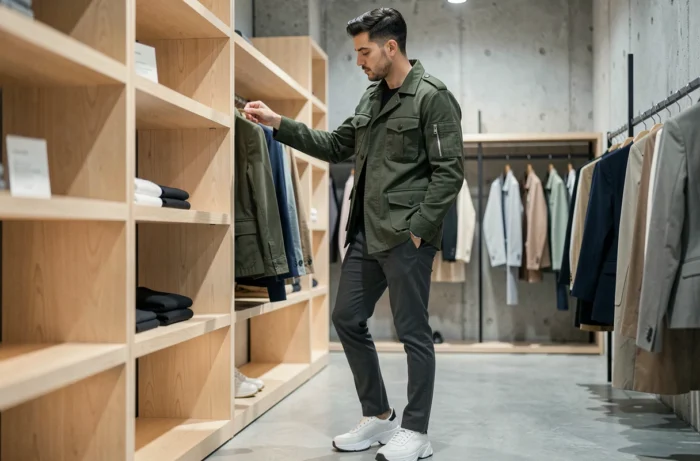
Second-hand fashion and resale: a trend redefining style adoption
A McKinsey and Business of Fashion report on the state of fashion 2026 indicates that second-hand fashion and luxury should grow two to three times faster than the new market until 2027. The global resale market is expected to represent around $317 billion, with acceleration driven by online platforms.
“Adopting a trend” no longer means buying new in-store. Second-hand is restructuring the shopping journey and the very notion of novelty in the wardrobe.
What this changes for the autumn-winter wardrobe
The most sought-after resale items this season are those that align with the macro-trends from the shows, but purchased second-hand. The oversized trench, voluminous knitwear, and structured leather can be found both on Vinted and at traditional retailers.
The price difference between new and second-hand in these categories remains significant. For a savvy consumer, resale becomes a channel for accessing seasonal fashion trends, not a default choice.
- Resale platforms now incorporate filters by seasonal trend, modeled after recent shows
- Second-hand luxury is growing faster than the second-hand fast fashion segment, indicating a market upgrade
- In France, 69 companies (including Vinted, H&M, Primark) advocate for reduced taxation on second-hand, which could further accelerate the trend
Algorithmic standardization of styles: the fashion trap to avoid this season
Recommendation algorithms reduce clothing diversity, particularly among Gen Z. An analysis by RTBF directly poses the question: are social networks killing stylistic uniqueness?
The mechanism is documented. Platforms like TikTok and Instagram favor high-engagement content, creating visual repetition loops. A style identified as performing (the “quiet luxury” yesterday, the “mob wife” the day before) spreads massively, then disappears within weeks.
Building a wardrobe that resists micro-trends
We recommend distinguishing structural trends (those that appear in multiple collections over several seasons) from algorithmic micro-trends (viral for three weeks, then forgotten).
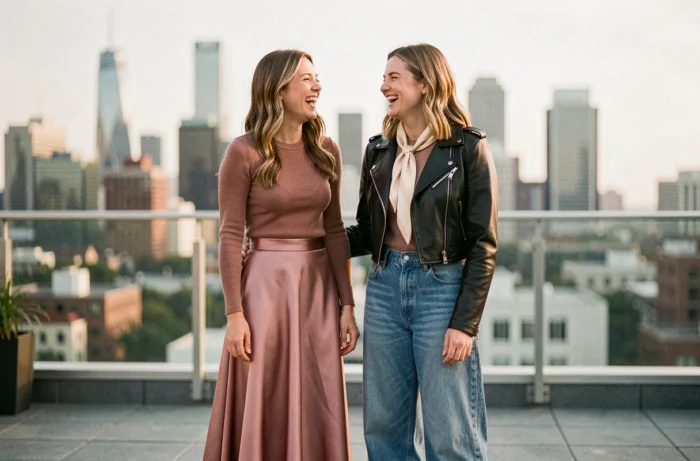
Fashion experts analyzing the autumn-winter 2026 shows identify a few stable underlying lines:
- Voluminous silhouettes on the upper body, with pronounced shoulders, are entering their third consecutive season
- Leather and its alternatives remain a structuring material for strong pieces
- Earthy tones and browns (following the Mocha Mousse Pantone 2025) continue to dominate palettes, proving their grounding beyond a mere fashion effect
- Artisanal knitwear and textured fabrics are gaining ground against smooth and uniform surfaces
Clothing rental and circular wardrobe: an emerging fashion trend
The clothing rental market is expected to see notable growth in the coming years, according to several sector analyses. This model is particularly appealing for event pieces and seasonal trends with short lifespans.
For an autumn-winter wardrobe, renting allows testing a strong trend (a statement coat, a piece in synthetic fur) without the financial commitment of a purchase. The circular wardrobe combines thoughtful buying, second-hand, and rental depending on the type of piece.
This model remains hindered by logistics (cleaning, returns, condition of items) and the lack of standardization in rental conditions. Brands investing in this segment must still resolve these operational frictions for rental to become a reflex, not a curiosity.
The autumn-winter 2026 season marks less a radical aesthetic renewal than a change in how to access trends. The purchasing channel now matters as much as the adopted style. Traced upcycling, structured resale, occasional rental: the tools exist. The real challenge remains to articulate them into a coherent wardrobe, without succumbing to algorithmic accelerations that push for perpetual renewal.