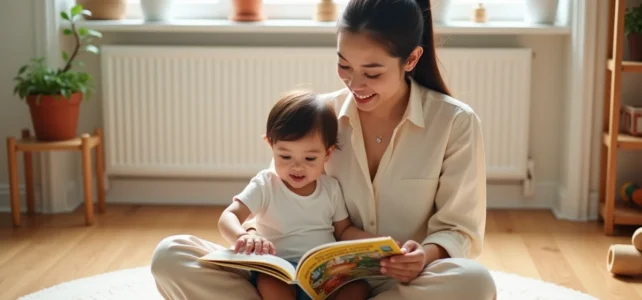
An online media dedicated to parenting stands out by the way it organizes its content. When the themes cover everything from pregnancy to raising a teenager, readability relies on a clear division into sections. Happy Maman structures its publications around categories designed to support each stage of family life, from birth to everyday questions.
Navigating a parenting media: why the structure of sections matters
Most family-focused sites pile articles without a visible hierarchy. The reader stumbles upon a post via a search engine, reads it, and then leaves the site due to not knowing where to look next. This pattern penalizes both the hurried parent and the media itself.
A thematic section architecture solves this problem. Each category groups articles related by a common subject (health, education, family life), allowing for seamless transitions from one piece of content to another without restarting a search. To explore the various sections of Happy Maman, this classification logic facilitates the discovery of complementary topics to the one that motivated the initial visit.
The benefit is twofold. A parent seeking guidance on infant nutrition will find, in the same section, articles on food diversification or common allergies. Each section functions as a coherent thematic file, not as a catch-all drawer.
Pregnancy and early childhood sections: the foundations of parental content
The first months of parenthood generate the highest volume of questions. Happy Maman dedicates distinct categories to pregnancy and early childhood, avoiding the mixing of concerns for a pregnant woman with those of a parent of a three-year-old.
The pregnancy section covers physical changes, medical follow-up, and preparation for childbirth. The section dedicated to early childhood addresses infant sleep, motor development stages, and early social interactions.
This separation is not an editorial detail. A parent experiencing a difficult pregnancy does not need to sift through articles about a two-year-old’s potty training. Pre-sorting reduces cognitive load and directly guides to relevant content.
Understanding parental emotions from birth
Several articles in these sections address the emotions related to the arrival of a child. The 2026 barometer from the Foundation for Childhood indicates that more than one in two parents report needing information about parenting, particularly to better understand their child’s needs and adapt their educational practices. This need for support justifies the presence of content dedicated to listening, parental confidence, and managing doubts.
Education and family life daily: the sections that build loyalty
Beyond early childhood, the themes evolve. The sections dedicated to education tackle topics that concern parents over time: screen management, communication with a school-aged child, sibling relationships.
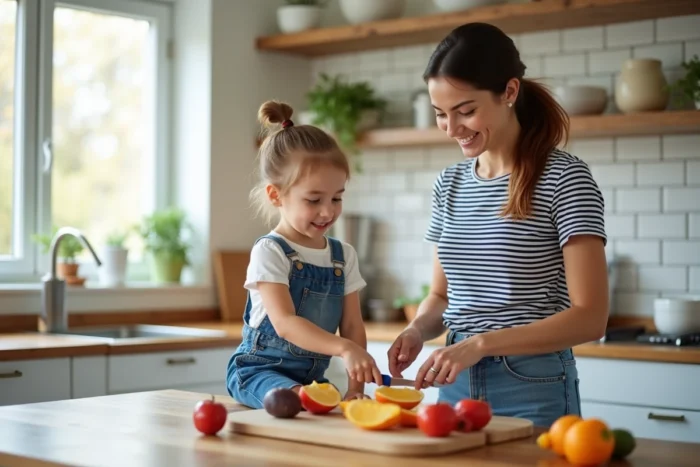
Happy Maman also offers a category focused on family life in a broad sense. It includes content on task distribution, meal organization, or shared activities. These topics touch on daily life in a concrete way.
- Articles on education discuss how to support a child in their learning, not just academic but also social and emotional
- The family life section covers the balance between professional life and parental responsibilities, an issue that nearly three in five parents consider crucial in their career choices according to a survey shared by Naître et grandir
- Content on stories and creative activities offers ideas that can be applied without specialized materials, suitable for different ages
These sections transform a one-time media into a regular resource. Parents return because the issues change with the child’s age, and the categories follow this progression.

Parental well-being and self-confidence: a section often absent elsewhere
The majority of parenting media focus their content on the child. Happy Maman explicitly allocates space to the well-being of the parent as an individual. This distinction deserves to be highlighted because it reflects a documented reality: an exhausted or isolated parent struggles to maintain a calm relationship with their children.
Articles in this section address chronic fatigue, parental guilt, and social pressure related to educational standards. The tone remains informative rather than prescriptive, avoiding the pitfall of moralizing advice.
Concrete tips rather than theoretical discourse
Each article offers applicable suggestions. No abstract lists on “self-care,” but short formats that identify a specific problem and suggest an appropriate response. For example, an article on parental sleep deprivation will distinguish causes related to the infant from those related to mental load, with different approaches for each.
- Managing parental stress: techniques grounded in real situations (chaotic meals, bedtime resistance) rather than decontextualized relaxation exercises
- Content on confidence in educational choices, facing contradictory opinions from family or social media
- Articles on the couple after the arrival of a child, with guidelines for maintaining regular dialogue
Organization of the sitemap and access to parenting content
The sitemap of Happy Maman reflects this architecture. Each section appears with its subcategories, allowing for quick identification of the site’s editorial scope. For a parent discovering the media, this page functions as a summary.
The clear structure of a sitemap also helps search engines index content by theme. An article on the emotions of a five-year-old will be linked to the correct category, improving its visibility for corresponding queries.
The classification by life stages (pregnancy, birth, early childhood, childhood, family) follows a chronological logic that the parent intuitively recognizes. This organization spares the need to search in which corner of the site the sought information is hidden.
A parenting media that structures its sections around real moments of family life meets a documented need for reliable and accessible information. The next time a question arises between two feedings or after school, the answer is likely already found in the right category.