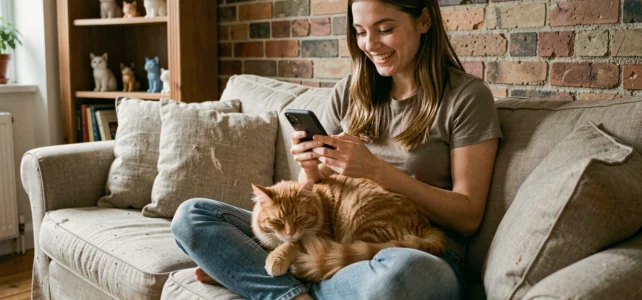
Aplouf.com presents itself as a French-speaking community platform entirely dedicated to cats. The site offers a mix of photo sharing, fun challenges between owners, and thematic sections on care, nutrition, or feline behavior. In a digital landscape where pet content is scattered across Instagram, TikTok, and Facebook, this type of niche platform attempts to occupy a specific space.
Technical Check of Aplouf: HTTPS, Legal Mentions, and Trust Signals
Before signing up for a community platform, a few technical reflexes can help assess its reliability. Several recent discussions around Aplouf raise the question of the presence of an HTTPS certificate, a SIRET number, and compliant legal mentions. These elements do not guarantee the quality of the content, but they constitute a minimal foundation of transparency.
Checking the HTTPS protocol in the address bar remains the first step. A community site that collects personal data (email address, photos, possibly location) without an encrypted connection exposes its members. On this point, user feedback varies: some report unusual redirects, while others see nothing abnormal.
For those who wish to delve deeper into the platform’s functioning, an article details everything about the Aplouf site with its mechanics and specifics. This type of resource helps form an opinion before creating an account.
Gamification and Feline Community: What Aplouf Offers
The functioning of Aplouf is based on game mechanics integrated directly into the site. Members share photos of their cats, participate in thematic challenges, and vote on others’ posts. This gamification system creates a different level of engagement than a simple forum.

The platform organizes its content around spaces structured by theme: breeds, nutrition, behavior, health. This architecture resembles a vertical social network more than a classic editorial blog where a single author publishes and visitors read passively.
However, the depth of health or behavior content remains difficult to assess without knowing the qualifications of the contributors. On a community network, the reliability of veterinary advice entirely depends on who writes it. An owner sharing their personal experience with a feline condition does not have the same legitimacy as a qualified veterinarian.
Aplouf vs. International Feline Platforms: A French-Speaking Positioning
Aplouf’s direct competitors are not Facebook or TikTok, but rather the specialized communities that already exist internationally. Catit, for example, claims a cat community present in over 150 countries and publishes a free monthly magazine. Woopets, on the French-speaking side, has combined forums, breed sheets, and editorial advice for several years.
Aplouf’s positioning is distinguished by two characteristics:
- An exclusively French-speaking base, which limits the size of the community but facilitates exchanges between owners sharing the same regulatory framework (I-CAD identification, LOOF standards for purebred cats)
- A playful mechanism integrated into the user journey, where most feline forums remain on a classic question-and-answer format
- A moderation presented as animal welfare-oriented, with filtering of content showing cats in stressful situations, a recurring problem on generalist networks
The available data does not allow measuring the actual size of the active community on Aplouf, nor comparing it to the exchange volumes on established forums like those of Woopets or Chiens-Chats.be.
Moderation and Animal Welfare: Open Questions
The moderation of feline content remains the structural weak point of generalist social networks. Videos where cats are forcibly dressed up or sprayed with water sometimes circulate for days on TikTok or Facebook before being removed. Recommendation algorithms favor formats that elicit strong emotional reactions, even when they involve a form of mistreatment.

Aplouf displays a policy of moderation focused on animal welfare. The principle seems consistent with the expectations of a community of responsible owners. The question remains how this moderation works in practice: volunteer moderators, community reporting, automatic image filtering?
No detailed public information on these mechanisms is accessible at this stage. For a site that collects and disseminates identifiable (and sometimes geolocatable) animal photos, transparency regarding data handling and moderation is a real issue.
Verticalization of Animal Services: Aplouf in a Changing Ecosystem
The recent trend in the pet sector goes beyond community content. In 2026, a new French platform positioned itself as a mix between Doctolib and Planity for animals, illustrating a growing verticalization of pet-tech services. Veterinary appointment scheduling, health tracking, vaccination reminder management: the market is structuring around concrete services.
In this context, a platform like Aplouf occupies a different segment, that of social connection between owners. The two approaches are not competitive, but they address distinct moments in the relationship between an owner and their cat. Community entertainment on one side, daily management of animal health on the other.
The question for Aplouf will be to demonstrate lasting utility beyond the playful mechanics. Niche community platforms often have a short engagement cycle if they do not renew their features. French-speaking feline forums from the 2010s are an example: many saw their activity decline with the migration of discussions to Facebook groups.
Aplouf is attempting a bet that makes sense on paper, that of a dedicated space where the cat is not drowned in advertising noise. The viability of this model will depend on the site’s ability to maintain an active community, ensure the reliability of its health content, and remain transparent about its moderation practices and personal data management.