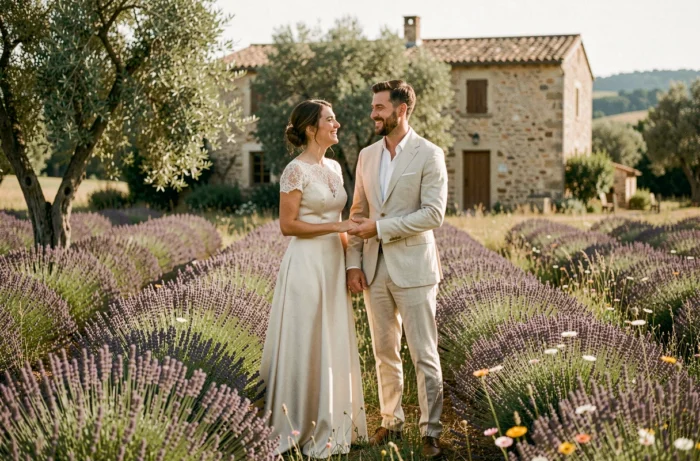
Marriage in France now absorbs a significantly higher budget than it did five years ago. The 2026 wedding sector report published by Mariages.net, based on 1,304 couples married in 2025, documents an increase of about 25% in the average budget since 2021, driven by food inflation and the revaluation of service providers’ rates. This data influences all organizational decisions, from the choice of venue to the selection of the caterer.
Inflation of wedding service providers: understanding the new budget structure
The rise in costs does not affect all categories equally. Caterers, reception venues, photographers, and musicians have passed on the increased costs that occurred during the inflationary period of 2022-2023. The catering category, historically the heaviest, concentrates most of the drift.
This reality forces couples to reconsider the budget allocation from the outset. Rather than uniformly cutting back on each line item, couples who prioritize early between essential and compressible categories maintain a margin for unexpected expenses. Booking the venue and the caterer first allows them to lock in the two most volatile line items.
To track these developments month by month, wedding news on Actu Mariage compiles updates from the French wedding sector, from price adjustments to new service provider offerings.
Exceptional reception venues: why private estates dominate searches
The same Mariages.net 2026 report identifies the reception venue as the number one priority for couples. Vineyards, private estates, castles, and medieval abbeys capture demand at the expense of traditional multipurpose halls.
This shift is explained by a change in the relationship to marriage itself. The venue is no longer just a logistical container. It becomes the thread that guides the day, dictating the color palette, the style of stationery, the dress code for guests, and even the menu.
Multi-day weddings: a trend redefining the reception
The rise of multi-day weddings accompanies this demand. Ceremony on Saturday, dinner under the stars, brunch the next day: this format transforms the event into an immersive stay. For guests, this means more shared time. For organizers, it implies negotiating the privatization of the venue for two or three days, which radically changes the “rental” category.
A venue reserved from Friday to Sunday costs significantly more than a hall rented by the day, but it eliminates transportation costs between multiple sites and simplifies coordination among service providers.
Phone-free ceremonies and guest experiences: what changes in 2026
The wedding trends of 2026 are not limited to decoration or venue. They affect the very flow of the ceremony. The concept of “unplugged” weddings is gaining ground. The principle is simple: guests put away their devices during the ceremony to experience the moment without screens in between.
The benefits are twofold. The professional photographer works without arms stretched in his field of vision. Guests, freed from the temptation to film, are more emotionally present. A sign or an announcement at the beginning of the ceremony is enough to establish the rule.
Mobile bars and quirky entertainment
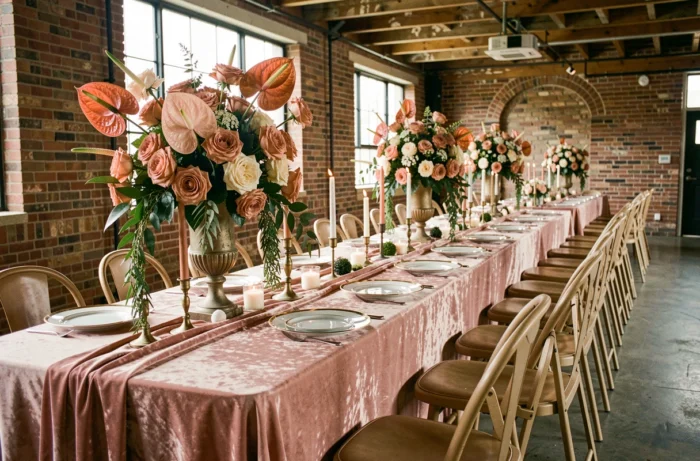
On the reception side, mobile bars (cocktails prepared in front of guests, spirit carts, themed drink stations) are gradually replacing the classic fixed bar. Their logistical advantage is concrete:
- They distribute guest flows across multiple points of the venue, reducing wait times and energizing movement within the space
- They allow for different food and drink pairings at each station, without overloading the caterer’s service
- They create distinct micro-ambiences (a gin bar in the garden, a champagne counter under the arch), which multiplies the areas of conviviality for the evening
Stationery budget and gift list: two evolving categories
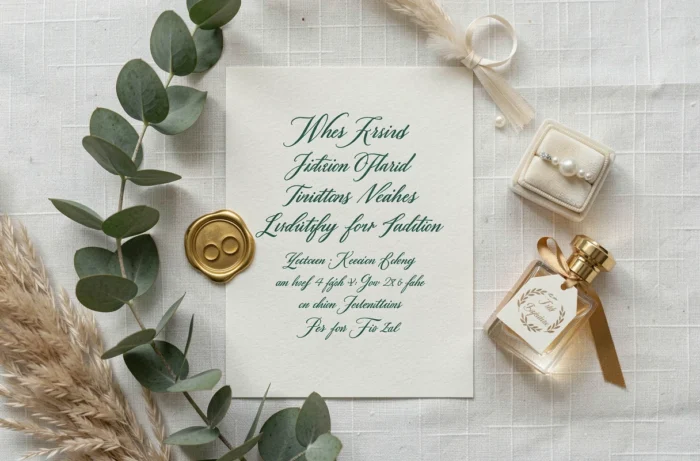
Wedding stationery (invitations, menus, place cards, ceremony booklets) remains a strong marker of the visual identity of the day. The current trend favors complete graphic consistency over isolated pieces. A couple that chooses a botanical motif for the invitation carries it through to the menu, table plan, and the day’s program.
This category remains one of the easiest to manage budget-wise. Digital printing in small series has made a level of customization once reserved for high-end prints accessible.
Gift list: the end of the porcelain service
Industry experts note a clear shift in couples’ expectations. According to an analysis reported by Grazia, newlyweds now prefer experiences or financial contributions (honeymoon, renovations) over traditional material gifts. The classic in-store wedding registry is giving way to online funds and mixed lists combining items and contributions.
For guests, this simplifies the choice. For couples, it prevents them from ending up with duplicates or rarely used items.

Organizing a wedding in 2026 means managing a budget under inflationary pressure while meeting higher experience expectations than before. Couples who secure their reception venue and caterer early in the preparations lock in the two categories most sensitive to price variations. The rest, from stationery to the gift list, is then calibrated based on the remaining margin.